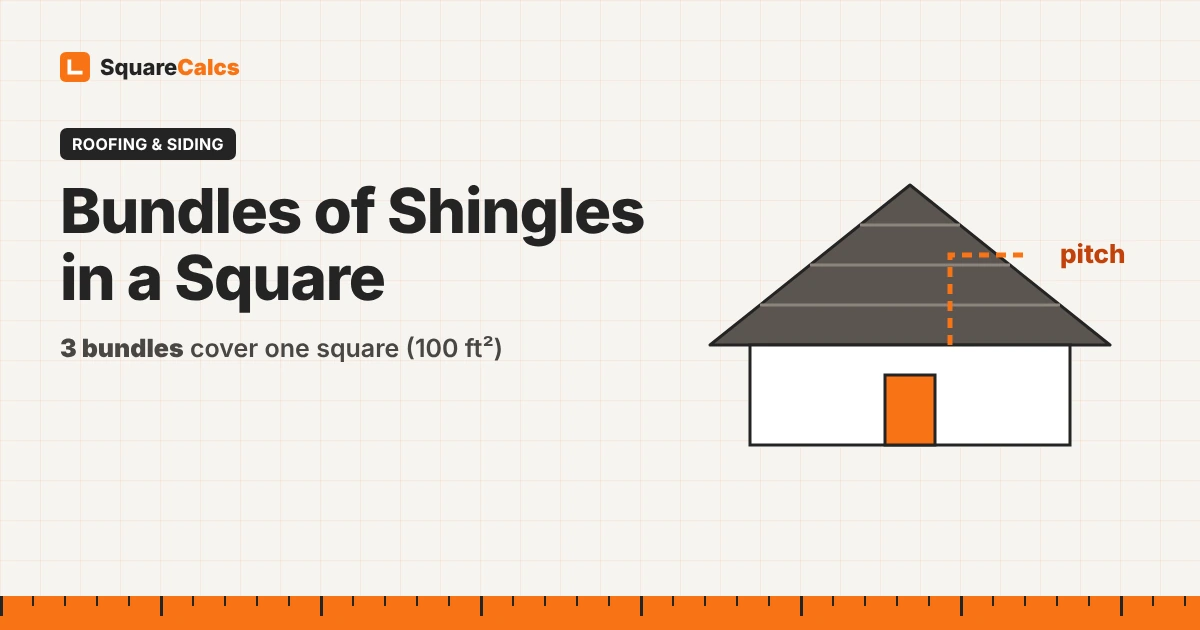
A successful roofing project begins with accurate material planning. Understanding bundles of shingles, roofing measurements, and coverage requirements helps homeowners estimate quantities, control expenses, and avoid unnecessary purchases during installation. To skip the math, use our free roofing calculator.
The roofing industry uses a standard measurement called a roofing square, representing 100 square feet of roof surface. This measurement makes ordering materials easier and improves communication between contractors and suppliers.
However, calculating shingles per square requires more than knowing the total roofing area. Shingle design, packaging, roof geometry, and installation requirements can significantly influence the final material quantity.
A practical estimate considers shingle types, bundle coverage, and potential cutting losses. These details help determine the correct bundle counts, reducing unexpected delays and additional trips when purchasing roofing materials.
Whether handling repair work or replacing an entire roof, understanding how squares work makes purchasing easier. The following calculations explain material quantities, coverage differences, and useful tools for better planning.
How Many Bundles Of Shingles Are In A Square?
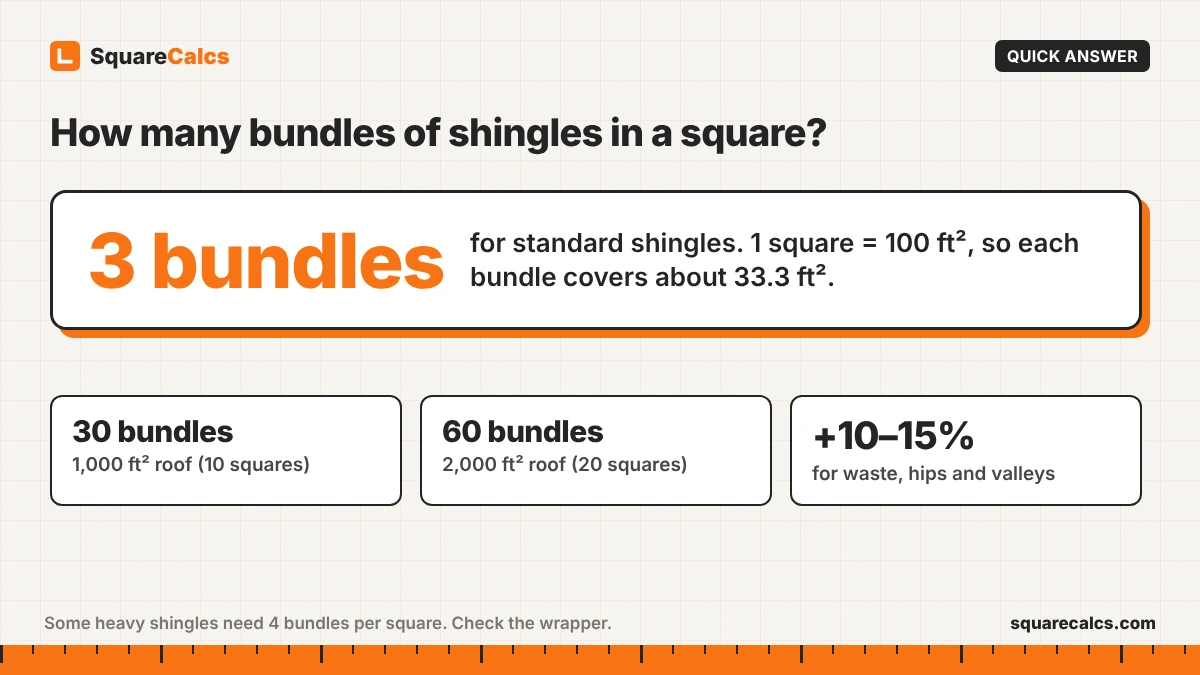
A standard roofing square represents 100 square feet, but the number of packages depends on product coverage. Most conventional asphalt products require three bundles to cover one complete square.
The familiar 3-bundle per square rule generally applies to standard 3-tab shingles. Each bundle covers approximately 33.3 sq ft, although manufacturers may specify different coverage depending on packaging and product design.
Architectural shingles have a thicker, heavier construction, so certain products require four bundles for one square. Always examine the manufacturer's stated coverage instead of assuming every package follows identical measurements.
Some specialty shingles need five bundles per square because individual packages cover less area. Their distinctive design, weight, and construction influence purchasing quantities more than the visible shingle count alone.
Before ordering, check the wrapper for coverage, product identification, and bundle quantity. This simple verification prevents mistakes when estimating roofing needs, especially when mixing different shingle styles across separate roof sections.
Roofing Square Calculation
Begin by measuring the length and width of each roof plane in feet. Multiply length by width to calculate the surface area of a rectangular section accurately.
For example, a rectangular roof section measuring 40 feet long and 25 feet wide contains 1,000 square feet. Record individual measurements before combining sections to establish the complete roof area.
Once measurements are available, divide the total square footage by 100. This calculation converts the measured surface into roofing squares, providing a consistent basis for estimating shingle requirements.
Consider a 2000-square-foot roof: dividing 2,000 by 100 produces 20 roofing squares. If standard shingles require three bundles per square, the initial estimate becomes 60 bundles.
The calculation must include every roof plane rather than relying exclusively on the building footprint. Pitch, overhangs, and roof geometry change actual surface area, so accurate measurements improve purchasing decisions.
Roofing Square vs Bundle
A roofing square measures an area, whereas a bundle of shingles describes a packaged quantity of roofing material. These measurements serve different purposes when preparing an installation estimate.
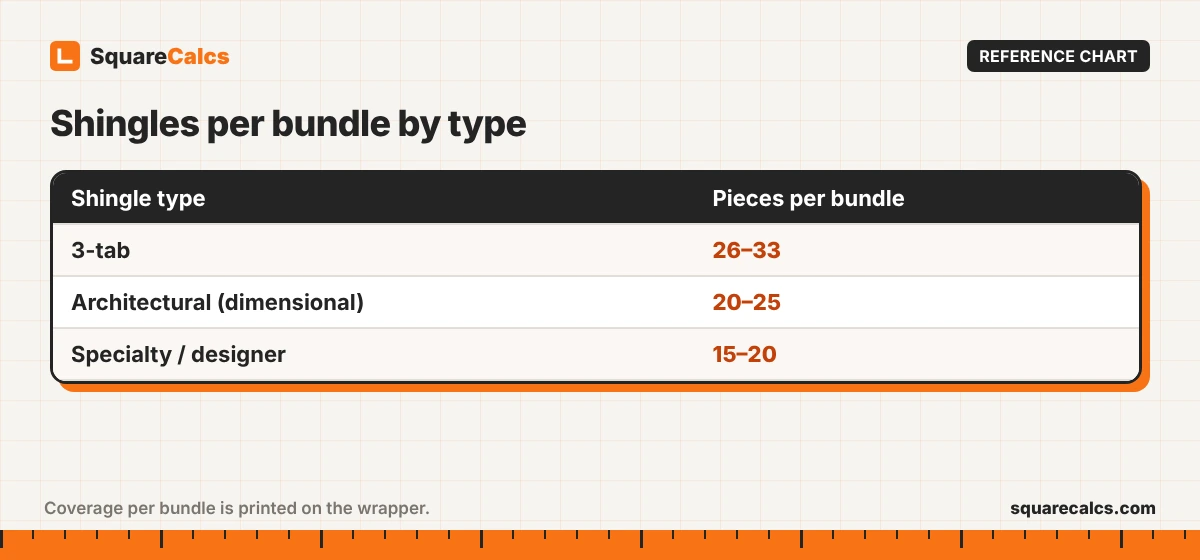
Standard three-tab shingles commonly contain approximately 26 to 33 pieces per bundle. Their lighter construction and relatively uniform dimensions make package coverage easier to estimate across conventional installations.
Architectural shingles often contain approximately 20 to 25 pieces per bundle. Their thicker profiles and layered construction create different coverage characteristics, making individual piece counts less useful than manufacturer specifications.
Specialty shingles may contain 15 to 20 pieces per package. Because designs and dimensions vary, contractors should compare stated coverage rather than assuming identical quantities across product categories.
The difference between 3-tab and dimensional roofing shingles matters when ordering. Always calculate using the product's coverage information, because piece counts alone cannot establish how many bundles cover a square.
How Many Bundles Of Shingles Do I Need For A 1000-Square-Foot Roof?
A 1000-square-foot roof represents 10 roofing squares because each square contains 100 square feet. This provides the starting measurement before selecting the appropriate shingle package and coverage specification.
For three-tab shingles, multiply 10 squares by three bundles per square. The resulting estimate is 30 bundles, excluding additional materials needed for cutting losses and installation-related waste.
If selecting architectural shingles, a four-bundle allowance per square produces 40 bundles. Confirm the manufacturer's actual coverage because some architectural products may follow different packaging and installation requirements.
For specialty shingles, five bundles per square would produce 50 bundles. This example demonstrates why identifying the precise product before purchasing is essential for accurate material planning.
Roof slope, pitch, and design complexity can increase quantities. Roofs containing valleys, dormers, and numerous angled sections generally require additional cutting, so include an appropriate waste allowance when calculating orders.
Guide To Roofing Shingles: Sizes, Costs, And Measurements
A roofing square provides the foundation for estimating material costs and quantities. It represents 100 square feet, allowing contractors to compare different products using a consistent measurement system.
Standard asphalt shingles commonly measure approximately 12 inches wide and 36 inches long. However, dimensions, exposure, and installation specifications vary, so always consult the manufacturer's product documentation before estimating coverage.
A typical bundle may cover approximately 33.3 square feet. Basic asphalt products can cost between $30 and $50 per bundle, while premium materials generally command higher prices depending on quality.
For a conventional square, three bundles costing 30–50 each would produce an estimated material expense of 90–150. Actual prices depend on location, manufacturer, product grade, and supplier.
Material quantity alone does not determine project cost. Shingle weights, transportation, roof accessibility, installation complexity, and additional components influence the final budget and should be considered before purchasing roofing supplies.
The estimate changes when roof geometry becomes complicated. For example, hips, valleys, and dormers increase cutting requirements, making a standard calculation insufficient without additional allowances for material losses during installation.
A waste factor of 10–15 percent is commonly used for planning. More complicated designs may require additional material, particularly where numerous slopes, overlaps, and angled cuts affect coverage.
Roof Shingle Bundle
A roof shingle bundle calculator simplifies material estimates by combining roof dimensions, selected shingle type, and package coverage. It provides a useful starting point before confirming quantities against manufacturer specifications and site measurements before ordering.
Enter the total roofing square footage rather than the building footprint alone. Select three-tab, architectural, or specialty shingles, then provide the applicable coverage and waste factor to produce a more dependable bundle estimate for your project.
For a simple roof, a ten-square estimate using three bundles per square starts at thirty bundles. Applying a ten percent waste allowance increases the order to thirty-three bundles, subject to package rounding for this example.
Complex roofs need closer inspection because valleys, dormers, steep slopes, and angled edges create additional cuts. Measure each roof plane separately, include starter strips and ridge caps, and verify all accessory requirements before finalizing quantities.
Use calculator results as planning guidance, not a substitute for checking product labels, local standards, and installer recommendations. Accurate measurements, confirmed coverage, and sensible waste allowances make purchasing decisions more reliable for the finished roof.
Planning a bigger job? Browse all our roofing & siding calculators to work out every material you need.
Frequently Asked Questions
How Does Roof Pitch Change How Much Material I Need?
Roofing estimates become inaccurate when slope measurements are ignored. A 4/12 roof adds approximately 5 percent, while a 6/12 increases material requirements by 12 percent, making accurate calculations essential before purchasing roofing supplies.
How Many Downspouts Does My Gutter Run Need?
Gutter drainage depends on rainfall intensity and roof coverage. The Copper Development Association handbook recommends considering 50 feet of gutter per outlet, while UPC Table 1103.1 and IPC Table 1106.3 provide additional drainage guidance.
Do I Need Underlayment Under Shingles, and How Much?
Yes, IRC requires it, and skipping underlayment can affect manufacturer warranties. Synthetic rolls generally cover 10 squares, whereas 15 lb felt covers four and 30 lb felt covers two squares.
Can I Estimate My Roof Without Getting on It?
Yes, calculate roofing requirements safely by measuring the building footprint at the ground, including eave and rake overhangs. Then apply the appropriate pitch factor, using attic measurements with a level and tape when accessible.
How Many Shingle Bundles Do I Need Per Square?
A standard roofing square covers 100 sq ft, usually requiring three bundles per square of standard three-tab or most architectural shingles. Add 10 percent waste for straightforward roofs and more for complex layouts.